
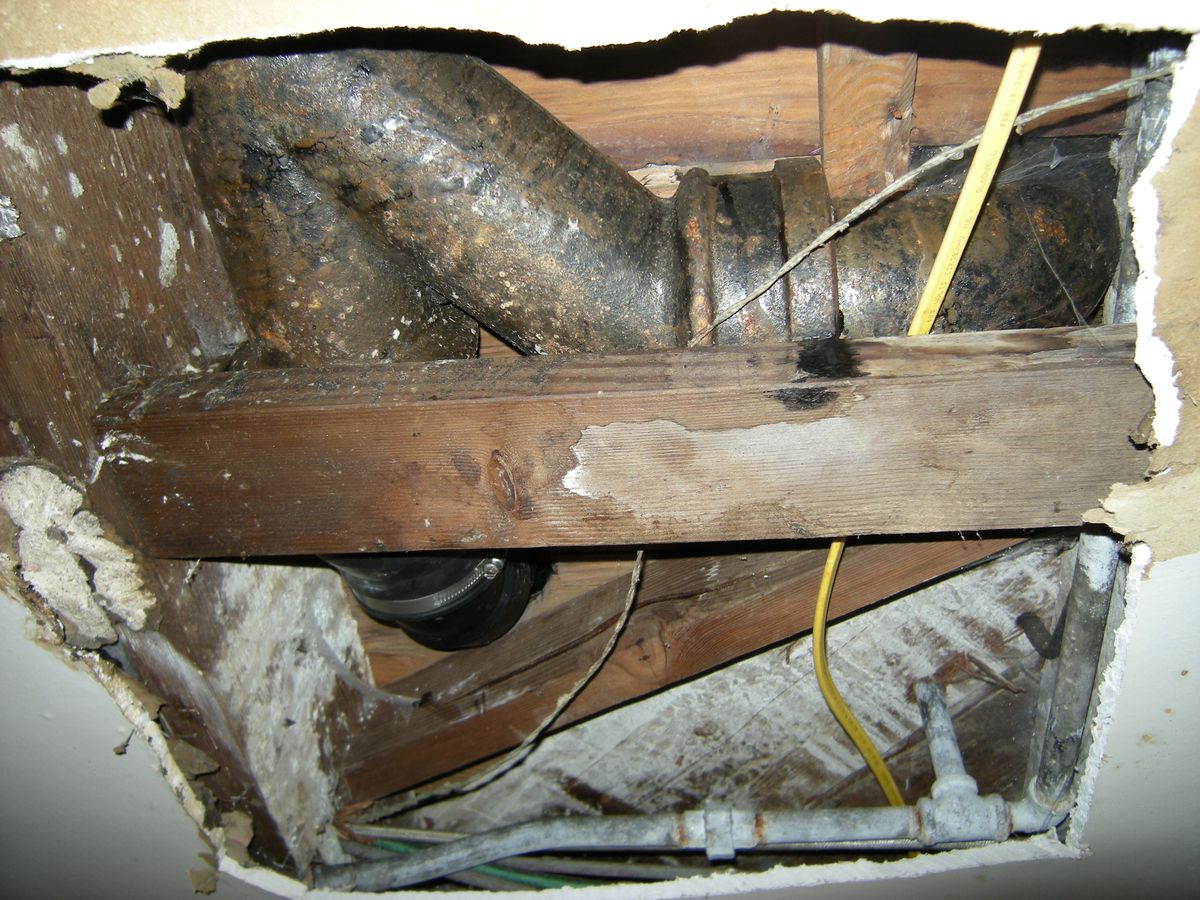
What the sewer lateral is
Your home's drainage does not end at the foundation. Every drain in the house feeds into the building sewer, which exits under the slab or through the foundation wall and becomes the sewer lateral: the underground pipe that carries all your wastewater across your yard, under the sidewalk and parkway, to its connection — the tap — at the public sewer main in the street. In Cerritos, that run is typically 40 to 80 feet of pipe, 3 to 6 feet deep, installed when the tract was built.
For most Cerritos homes, "the lateral" means vitrified clay pipe with bell-and-spigot joints, with cast iron for the under-slab portion. It is the single most failure-prone part of a home's plumbing precisely because it is the oldest, the least accessible, and the most exposed to roots and soil movement — and because most homeowners do not know it exists until it fails. Understanding the lateral is the foundation of every other page on this site: trenchless repair, replacement, and root removal are all lateral services by other names.
Who is responsible for the lateral
This is the question that surprises nearly every homeowner, so here it is plainly: in most cases, you are. Regional guidance from the Los Angeles County Sanitation Districts — the agency framework covering sewer service in this area — states that the property owner is responsible for maintaining the drainage plumbing and the sewer lateral connecting the property to the sewer in the street. That responsibility typically includes the entire lateral: the section under your yard and the section under the sidewalk, parkway, and street up to the public main. The city maintains the main itself; everything from your home to that connection is generally yours.
Why does this matter? Because lateral repairs are not small, and many homeowners discover their responsibility at the worst possible moment — when a plumber explains that the break under the sidewalk is theirs to fix. A few practical consequences:
- Repairs under public right-of-way need city permits and sometimes traffic control. Your provider should handle this, but it is part of the job's cost and timeline.
- Confirm the specifics with the City of Cerritos Building & Safety Division. Responsibility lines can vary by property and by local detail; verify yours before authorizing work rather than relying on general guidance.
- Insurance rarely covers lateral failure. Standard homeowners policies typically exclude wear, aging, and root intrusion — the exact causes of lateral failure. Some policies offer a service-line endorsement; check yours.
- At resale, the lateral is a negotiation point. Buyers increasingly request camera inspections of the lateral; a documented new or lined lateral is an asset, a failing one is a credit.
Shared and HOA situations differ. In townhome communities like Cerritos Villas, laterals may be shared between units or governed by HOA documents that split responsibility between owners and the association. Read our Cerritos Villas guide before assuming the standard single-family rules apply.
How lateral repair works
"Lateral repair" is the umbrella term — the specific method depends on what the camera finds. Spot repair excavates at one marked defect and replaces a short section; it makes sense for a single isolated break in an otherwise sound line, and little else. Cured-in-place lining rehabilitates the full run from the inside, sealing every joint — the right answer for widespread joint deterioration and root intrusion in a line that still holds its shape. Pipe bursting replaces the full line trenchlessly where the old pipe is too far gone to line but the alignment is sound. Open-trench replacement excavates and replaces the line where bellies, grade problems, or collapses rule out trenchless methods.
The through-line: every method starts with a camera inspection that maps defects by location and depth, and the method is matched to the footage. Our sewer repair service serving Cerritos connects you with specialists who diagnose on video first — because the lateral you cannot see is the worst place in your home to guess.
8 warning signs your lateral needs attention
- Multiple fixtures misbehaving together. The lateral is the one pipe they all share; system-wide symptoms implicate it.
- Recurring clogs after professional clearing. The blockage returns because the defect that caused it — open joint, belly, offset — is still there.
- Sewage odors in the yard along the pipe path. A cracked lateral vents gas through the soil between your home and the street.
- Lush or soggy strips in the lawn. A leaking lateral irrigates and fertilizes one line of grass — unmistakable in dry months.
- Slow drainage that worsens over months. Progressive restriction from growing roots or accumulating debris at an offset.
- Gurgling toilets when other fixtures drain. Air displaced by a downstream restriction in the lateral.
- An aging clay lateral with no service history. A 1970s line never inspected is a line with unknown condition — and 50 years is a long time.
- Neighbors with lateral problems. Same tract, same era, same pipe, same soil, same trees. When neighbors start replacing laterals, yours deserves a camera.
How Cerritos laterals fail
The failure script is consistent across Cerritos's tracts: clay joints admit roots; soil movement offsets sections; bellies form where soil settles; cast iron under slabs corrodes from the inside. Decades of cycles compound until flow is chronically restricted or the pipe is structurally compromised. Construction damage — fence posts, deck footings, pool excavations — adds sudden injuries to the slow decline. For the full breakdown, see tree root intrusion and our cleaning guide; the short version is that 50-year-old clay in root-friendly soil fails at the joints, almost every time.
Safe checks you can do before calling
Learn where your lateral runs — generally a straight line from where the building sewer exits toward the street connection. Walk it and note odors, soggy spots, or lush strips. Find your cleanout. Note which fixtures are affected and whether the problem is getting worse. If you are buying a home, make a lateral camera inspection a contingency — it is the highest-value inspection dollar in an older-home purchase. Do not dig to expose the pipe yourself, and do not use chemical cleaners on a suspected lateral blockage.
The pro visit, step by step
- History and symptom review. Age of home, prior sewer work, which fixtures, how long.
- Camera inspection to the city main. Full lateral surveyed; every defect located and depth-marked at the surface.
- Cleaning if needed. Roots and buildup cleared so the true pipe condition is visible.
- Repair recommendation with video. Spot repair, lining, bursting, or replacement — matched to the footage and explained to you.
- Permits. City of Cerritos sewer permits secured; right-of-way requirements handled.
- The repair. Executed per the agreed method, with the connection at the city main verified.
- Verification and records. Post-repair camera footage for your files — keep it with your home records.
What drives the cost of lateral repair
| Factor | How it affects your job |
|---|---|
| Repair method | Spot repair, lining, bursting, and open trench sit at very different project scales. |
| Length and depth | Full lateral runs to the street; deeper sections near the main cost more to access. |
| Right-of-way work | Repairs under sidewalk or street add permits, restoration, and sometimes traffic control. |
| Surface restoration | Driveway, landscaping, and hardscape restoration — the hidden half of open-trench costs. |
| Condition | What the camera shows determines everything; there is no honest quote without it. |
Because lateral work spans from affordable (spot repairs, cleaning) to major (full replacement under right-of-way), the range is wide. The camera inspection is the fixed, affordable first step that tells you which end of the range you are in.
When it is an emergency
Sewage backing into your home, surfacing sewage in the yard, or a complete blockage are emergencies. Stop using water, keep clear of contamination, and call (562) 555-0119. The first diagnostic question — your lateral or the city main — determines who fixes it, and a specialist sorts that out fast.
Sewer lateral FAQs
Where exactly does my responsibility for the lateral end?
Typically at the connection to the public sewer main — which usually means you own the section under the sidewalk, parkway, and street as well as your yard. Because details can vary by property, confirm yours with the City of Cerritos Building & Safety Division before authorizing work.
What if the blockage is in the street, not my yard?
If the blockage is in the public main, the city handles it — but if it is in your lateral's street section, it is generally still yours. A specialist with a camera and locator determines exactly where the problem sits, which settles the question fast.
My neighbor and I share a lateral. Who pays for repair?
Shared laterals are governed by property agreements, easements, or HOA documents — not by a universal rule. Get the arrangement in writing before work starts, and read our Cerritos Villas guide for how shared-line responsibility works in townhome communities.
Do I need a permit to repair my lateral?
Sewer work in Cerritos typically requires city permits and inspection, especially where work extends into the public right-of-way. Reputable providers handle permits as part of the job.
Will the city fix my sewer lateral?
Generally no — the lateral is the property owner's responsibility, while the city maintains the public main. If a backup is caused by the main, the city addresses the main; your lateral remains yours.
How do I find out where my lateral actually runs?
A camera inspection with a surface locator maps it precisely — the standard method. The city may also have as-built records for your tract, but the camera trace is definitive for your specific property.
Related services
Diagnose with sewer camera inspection; maintain with sewer line cleaning and tree root removal. For fixes, compare trenchless sewer repair and sewer line replacement. Area guides: Sorrento, Greenbrook, Rancho Cerritos, Shadow Park, Cerritos Villas.
Know your lateral before it surprises you.
Call now and get connected with a Cerritos sewer specialist. Camera-first diagnosis of the pipe you own but never see.
(562) 555-0119