
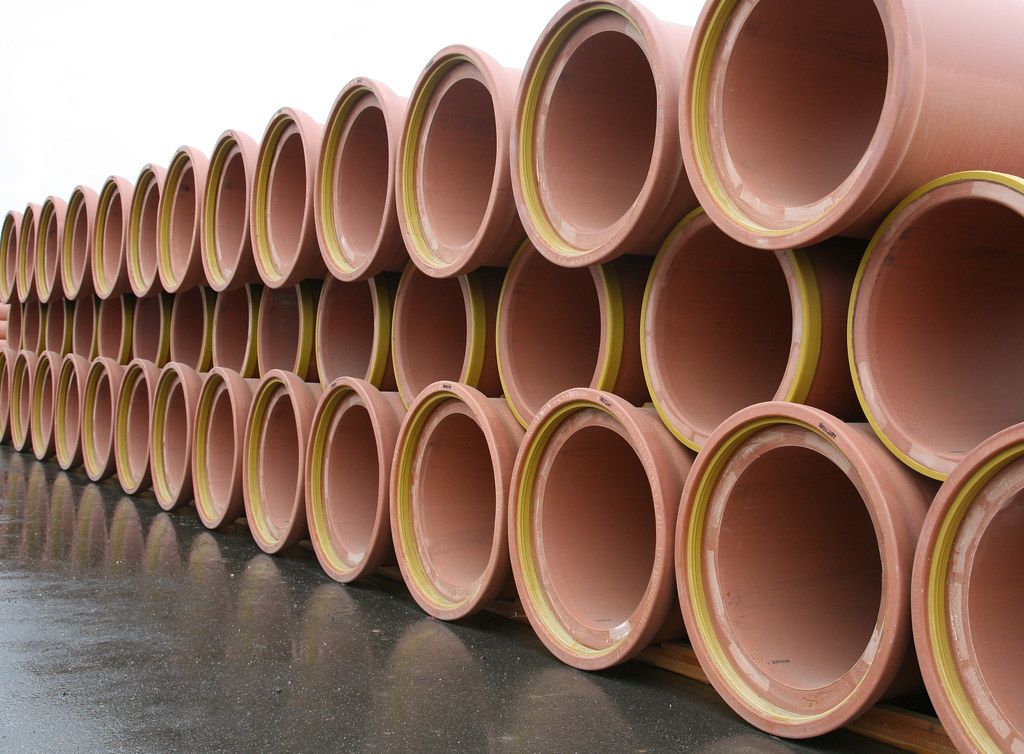
What sewer line replacement means
Replacement means the old lateral comes out of service and a new pipe goes in — new material, new joints, correct slope, full diameter. It is the most complete fix available: instead of rehabilitating a 50-year-old clay line, you end up with a modern pipe that should serve the home for decades. Replacement is the right call when the existing line cannot be lined or burst: fully collapsed sections, severe bellies that pond water, long runs of missing or crushed pipe, or damage so extensive that rehabilitation would cost nearly as much as starting over.
There is an important distinction homeowners miss. "Replacement" does not always mean an open trench across your yard. Pipe bursting — covered on our trenchless repair page — is a replacement method: it installs a brand-new pipe while fracturing the old one outward, through small pits instead of a continuous trench. Open-trench replacement, the traditional method, excavates the full pipe path. Both end with a new lateral; they differ enormously in surface disruption. A good provider explains which your property allows and why, with the camera footage as the deciding evidence.
For sewer line repair in Cerritos, replacement usually enters the conversation for the oldest clay laterals — homes from the first big tract waves — where decades of root intrusion, offset joints, and soil movement have compounded beyond what lining can bridge. It is a bigger project than lining, and it should never be the first recommendation without video proving the pipe is beyond rehabilitation.
Replacement methods compared
Open-trench replacement excavates along the pipe's path, removes the old line, lays new pipe on properly compacted bedding at the correct slope, backfills, compacts, and restores the surface. Its advantages are total control: the crew sees everything, corrects bellies and grade problems exactly, replaces the connection at the city main, and handles surprises — unknown utility crossings, unexpected soil conditions — directly. Its disadvantage is surface disruption: driveways get saw-cut, landscaping is removed, and restoration is a real cost line.
Pipe bursting replaces the pipe trenchlessly, as described above: bursting head fractures the old pipe outward while pulling new HDPE or PVC through the same alignment. Advantages: minimal surface disruption — just entry and exit pits — which is decisive when the lateral runs under a concrete driveway, RV pad, or pool deck. Limitations: it follows the old alignment, so it cannot correct a badly graded line; it needs adequate pit locations; and it is unsuitable where nearby utilities are too close.
| Open trench | Pipe bursting | |
|---|---|---|
| Surface disruption | Full excavation along pipe path | Entry and exit pits only |
| Grade correction | Yes — new bedding, exact slope | No — follows old alignment |
| Best when | Severe bellies, bad grade, main connection rebuild needed | Pipe failed but alignment/grade are sound; valuable hardscape above |
| Restoration | Significant — concrete, soil, landscape | Minimal — pits only |
The camera decides. Bellies and grade problems push toward open trench; a failed-but-straight line under a driveway pushes toward bursting. Be wary of any provider who recommends one method for every job — that is a sales preference, not a diagnosis.
8 warning signs your lateral may need replacement
- Camera shows collapse or missing sections. This is the definitive sign — no rehabilitation method works on pipe that is not there.
- Severe bellies holding standing water. Waste ponds in the sag; lining would just follow the sag. Regrading requires excavation.
- Failures at multiple points along one line. When the camera finds defects every few feet, rehabilitating the whole run costs nearly as much as replacing it — with an inferior result.
- Chronic backups despite repeated professional service. Years of snaking and jetting with no lasting improvement means the pipe geometry itself is the problem.
- Sinkholes or soil settlement along the pipe path. Soil washing into a broken pipe leaves voids; the ground above can settle or collapse — a safety issue, not just a plumbing one.
- Raw sewage surfacing in the yard. A major break is discharging directly. This is both a health hazard and an environmental problem.
- Under-slab cast iron with advanced corrosion. When the under-slab section is flaking and restricted along its whole length, spot repairs buy little time.
- A home purchase inspection that flags the lateral. If the camera flags collapse or severe defects during escrow, replacement is often the negotiated remedy — get it documented.
Why Cerritos laterals reach this point
It is usually not one event but decades of compounding damage. Clay joints admit roots; roots are cut or jetted repeatedly; each intrusion cycle widens the joints a little more. Soil movement on the coastal plain offsets sections; offsets catch debris; debris accelerates wear. A belly forms where soil settles; ponded waste erodes the invert; the belly deepens. By year 45 or 50, a lateral can have every failure mode at once — and that is when replacement becomes more honest than another rehabilitation attempt. Homes from Cerritos's earliest tract waves, now 55+ years old, are the likeliest candidates, especially where mature trees were planted directly over the pipe path in the 1970s and never removed.
One accelerant worth naming: construction damage. Fence posts driven through laterals, deck footings poured on top of them, and pool excavations that crushed sections are depressingly common finds on camera. If your home has had major yard construction since the 1980s, the lateral may have been living with an injury for decades.
Safe checks you can do before calling
Walk the line from your home to the street and look for settlement, sinkholes, or persistently soggy ground — note the locations. Check whether your cleanout shows standing sewage, which indicates a downstream blockage. Gather any records of past sewer work; a history of spot repairs on the same line strengthens the replacement case. Do not attempt to dig to "see the pipe" yourself: laterals can be several feet deep, utilities share the trench zone, and an open excavation is a safety hazard. And as always, stop using water if sewage is backing up.
Sinkholes and surfacing sewage are urgent. Soil voids can collapse without warning, and surfacing sewage is a contamination hazard. Keep people and pets away and call a professional immediately — this is beyond DIY assessment.
The pro visit, step by step
- Camera inspection and locate. Full survey to the main, every defect marked on the surface with depth. Replacement is never quoted without this.
- Method selection. Open trench vs. pipe bursting, decided by bellies, grade, alignment, utilities, and what sits above the pipe.
- Utility locate and permits. Underground Service Alert marking plus City of Cerritos sewer permits. This step is non-negotiable.
- Written scope and restoration plan. What gets dug, what gets restored, who restores it, and to what standard — in writing, before work starts.
- Excavation and replacement. Old pipe removed or burst; new pipe laid on compacted bedding at proper slope; connections made at the home and the city main.
- Inspection and backfill. City inspection of the new line where required, then backfill in compacted lifts to prevent future settlement.
- Post-install camera verification. The new line is camera-verified on video. Keep the recording with your home records — it matters at resale.
What drives the cost of replacement
| Factor | How it affects your job |
|---|---|
| Method | Open trench vs. bursting differ in labor, equipment, and restoration scope. |
| Length and depth | Longer, deeper laterals mean more excavation, shoring, and material. |
| Surface above | Concrete driveway, RV pad, or pool deck removal and restoration is a major cost driver for open trench. |
| Main connection | Rebuilding the tap at the city main adds complexity and sometimes traffic control. |
| Soil and access | Tight side yards, mature trees to work around, and poor soils all add time. |
| Permits and inspections | City permits and required inspections are part of any legitimate job. |
Replacement is the most expensive option on this site, and the price range is wide — which is exactly why the camera survey and written scope matter. Compare quotes on identical scopes: same method, same length, same restoration standard. A low quote that omits restoration or permits is not a bargain.
When it is an emergency
Surfacing sewage, sinkholes along the pipe path, or a complete blockage with sewage backing into the home are emergencies. Stop water use, keep clear of contaminated areas, and call (562) 555-0119 — a collapsed lateral cannot wait for a convenient appointment.
Sewer line replacement FAQs
How long does a sewer line replacement take?
It depends on the method, the lateral's length and depth, permits, and restoration. Trenchless bursting is typically faster on site than open trench because there is far less excavation and restoration. Your provider should give a realistic schedule after the camera survey — not before.
Will you have to tear up my driveway?
Not necessarily. If the line qualifies for pipe bursting, only small entry and exit pits are dug. Open-trench replacement does excavate the pipe path, which can include driveways. The camera and a site walk determine which your property allows.
What pipe material is used for new laterals?
Modern replacements typically use PVC or HDPE with glued or fused joints — materials and joint systems far more root-resistant than the bell-and-spigot clay they replace. Your provider works to current plumbing code and city requirements.
Do I need a permit for sewer replacement in Cerritos?
Sewer work in Cerritos typically requires city permits and inspection — the Building & Safety Division has a sewer permit process on file. Reputable providers handle permitting as part of the job; permitted work also protects you at resale.
Can I use my plumbing during the replacement?
Usually not while the line is open — the lateral is your home's only drain path. Providers plan the work to minimize the outage window and will tell you exactly when water use must stop and resume.
Should I replace my line or try lining it?
The camera decides. Lining wins when the pipe holds its shape; replacement wins for collapses, severe bellies, and grade problems. Be skeptical of any provider who recommends the same method for every job.
Related services
Start with sewer camera inspection to confirm replacement is truly needed. Compare trenchless repair options before committing to excavation. If roots caused the failure, read tree root removal to protect the new line. Understand your sewer lateral and your responsibilities. Cerritos sewer repair specialists connected through our service diagnose first and dig only when the video says so.
When the pipe is done, start over right.
Call now and get connected with a Cerritos sewer specialist. Replacement is a big decision — make it on video evidence, not guesswork.
(562) 555-0119