
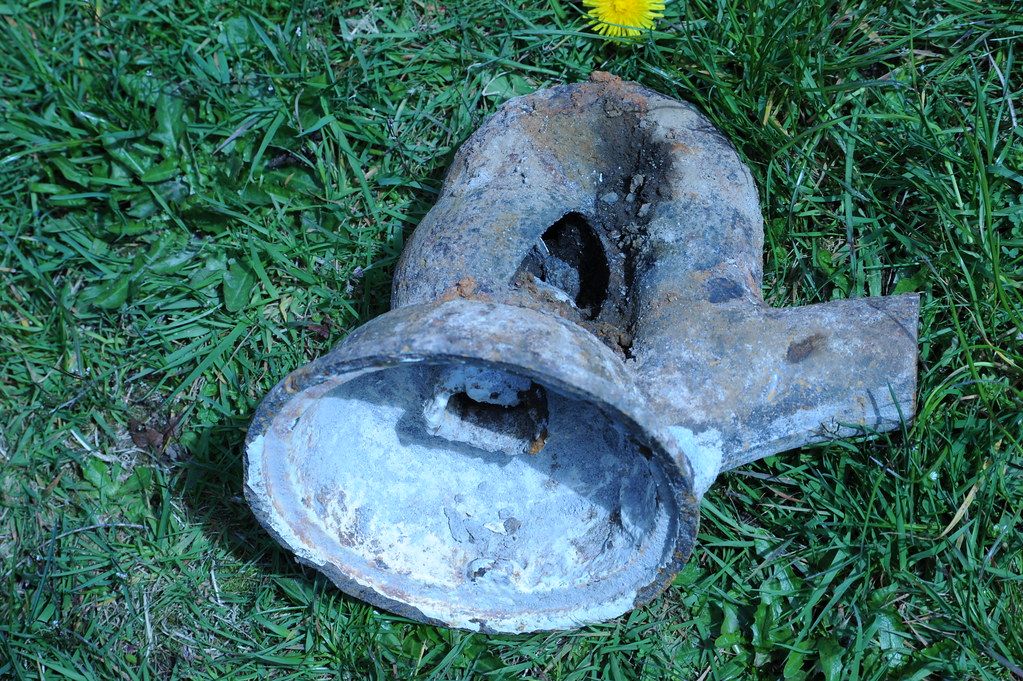
What tree root intrusion actually is
Tree roots do not break into healthy pipe — they exploit weakness that is already there. A sewer lateral carries warm, nutrient-rich water year-round, and fine root fibers grow toward any moisture seeping from a pipe joint. In Cerritos, the typical lateral is vitrified clay laid in short sections with bell-and-spigot joints — dozens of joints per line, each sealed originally with materials that degrade over decades. Once a joint seeps, roots enter hair-thin, then expand inside the pipe into a fibrous mat that catches paper and waste. The intrusion grows with every season; the joint opens a little wider with every cycle.
This is a maintenance problem and a structural problem at the same time. Cutting the roots restores flow — the maintenance part. But the open joint that admitted them is still there — the structural part. That is the central tension of this entire page: root removal buys time, but it does not close the door. Homeowners who understand that distinction make better decisions than homeowners who are sold "root removal" as a permanent fix.
The honest framing: professional root removal plus camera diagnosis tells you whether you are dealing with a maintenance situation (occasional root cutting on a mostly sound line) or a repair situation (joints so compromised that lining or replacement is the rational move). Cerritos sewer repair specialists in our network start with the camera, not the cutter.
How professional root removal works
Mechanical cutting uses a drain machine or sectional cable with root-cutting blades — spinning heads that shred the root mass inside the pipe and pull it back out. It is fast, effective for restoring flow, and the standard response to a root-blocked line. Its limitation is exactly what you would expect: it cuts roots at the pipe wall but cannot remove the portions embedded in the joint, which regrow.
Hydro jetting uses high-pressure water — typically 3,000–4,000 PSI for residential laterals — through specialized root-cutting nozzles that slice roots and flush the debris downstream. Jetting cleans the full pipe circumference, removing grease and scale along with roots, and is the preferred preparation before lining because a liner needs a clean host pipe. For heavy root masses, technicians often cut first, then jet.
What does not work: chemical root killers poured down drains (copper sulfate, foaming herbicides) are the DIY temptation. They may burn back fine roots near the treatment point but do not remove established masses, do not repair joints, and can harm the tree you are trying to save as well as downstream biology. Some municipalities restrict what can be flushed. Mechanical removal plus a plan for the joints beats chemistry every time.
The regrowth clock. After cutting, roots typically regrow into the pipe within 12–24 months in aggressive species — which is why "the same drain clogs every year" is the signature symptom. If your cycle is shorter than a year, the joints are badly compromised and it is time to talk repair, not another cutting.
8 warning signs of root intrusion
- The same drain clogs on a cycle. Annual or semi-annual clogs in the same line, cleared by snaking, are the textbook root pattern.
- Slow drainage that worsens in growing season. Roots grow most actively in spring and early summer; a drain that slows each spring is telling you the calendar.
- Gurgling toilets and drains. A root mass creates a partial blockage; displaced air gurgles back through traps.
- A large tree directly over the lateral path. In Cerritos tracts, mature ornamentals planted in the 1970s–80s now have root zones far wider than their canopies. If a big tree sits between your home and the street, suspect it.
- Snaking pulls back root fibers. If a previous service retrieved hair-like roots on the cable, the diagnosis is confirmed — the question is only how bad the joints are.
- Toilet paper and waste catching while water passes. A fibrous root mat acts like a sieve: liquids pass, solids accumulate. Intermittent "mystery" clogs fit this pattern.
- Lush growth concentrated over the pipe path. The leak that feeds roots also feeds the lawn above it.
- Older clay lateral with no history of repair. A 1970s clay line that has never been lined or replaced almost certainly has root entry at multiple joints — the camera will show how many.
Why Cerritos is especially root-prone
Three factors converge. First, the pipe: 1970s vitrified clay with bell-and-spigot joints — the most root-vulnerable common pipe type, with a joint every few feet. Second, the trees: Cerritos's mature tract landscaping includes fast-growing ornamentals typical of Southeast Los Angeles County — ficus and Indian laurel fig among them — planted decades ago and now fully mature, with aggressive, far-reaching root systems. Third, the climate: roots grow year-round in Southern California's mild winters, and irrigation keeps soil moist even through dry summers, so the moisture gradient that draws roots to a seeping joint never really switches off.
The practical consequence: in Cerritos, "roots in the sewer" is not an occasional problem but the background condition of aging clay laterals. The management question is not whether roots will find your joints but how compromised the joints are and whether the line has crossed from maintenance territory into repair territory. Only the camera answers that — which is why root removal without a camera inspection is half a service.
Safe checks you can do before calling
Map your trees: note large trees and their positions relative to the line from your home to the street. Note the clog cycle — when did it last happen, and the time before? That interval is diagnostically valuable. If a previous plumber mentioned roots, say so when you call; it focuses the visit. Do not pour root-killing chemicals as a first response, and do not rent a large drain machine without training — sectional cables can injure operators and damage pipes in inexperienced hands. If sewage is backing up, stop using water.
The pro visit, step by step
- Symptom and history review. Clog cycle, tree locations, prior root services — this frames everything.
- Camera inspection first. See the intrusion: which joints, how extensive, and what else is wrong (offsets, bellies, cracks).
- Mechanical cutting or jetting. Roots removed, debris flushed, flow restored.
- Post-cleaning camera pass. With roots gone, the joints are visible — now the technician can assess their true condition.
- The honest conversation. Maintenance plan (periodic cutting) vs. repair (lining the joints shut). The footage makes the case either way.
- Prevention planning. If the line is repaired, discuss protecting it: root barriers for new plantings, keeping aggressive species away from the new pipe path.
What drives the cost of root removal
| Factor | How it affects your job |
|---|---|
| Method | Mechanical cutting vs. hydro jetting; jetting costs more but cleans more thoroughly. |
| Severity | A light fiber intrusion is quick; a fully matted line takes serious time. |
| Access | Cleanout access vs. pulling a toilet; distance to the intrusion. |
| Camera work | Pre- and post-cleaning inspection — the part that turns cutting into diagnosis. |
| Frequency | A maintenance plan costs less per visit than emergency calls; compare honestly against lining. |
Root cutting is among the most affordable services on this site — which is why it gets oversold as a solution. Run the math: if you are paying for cutting every 12–18 months, compare five years of cutting against lining the joints shut once. Often the repair wins by year three or four, and it ends the cycle permanently.
When it is an emergency
A root blockage that has sewage backing into the home is an emergency regardless of cause. Stop using water and call (562) 555-0119. The immediate job is restoring flow; the camera afterward determines whether you need a maintenance plan or a repair.
Tree root removal FAQs
Will the roots grow back after removal?
Yes — expect regrowth within roughly 12 to 24 months for aggressive species, since the joint that admitted them is still open. If your clog cycle is shorter than a year, the joints are badly compromised and repair, not another cutting, is the rational move.
Should I cut down the tree to save my sewer line?
Not necessarily. The durable fix is usually repairing the pipe — lining seals the joints so roots cannot enter regardless of the tree. Tree removal is a last resort; consult an arborist before removing a mature tree, and fix the pipe either way.
Do chemical root killers poured down the drain work?
They may burn back fine roots near the dose point, but they do not remove established masses and do not repair the open joints — so the problem returns. Some products also risk harming the tree or violating local discharge rules. Mechanical removal plus a joint repair beats chemistry.
Can roots damage a brand-new PVC or HDPE line?
Properly installed modern pipe with glued or fused joints gives roots no opening to exploit — which is exactly why replacement and lining end the root cycle. Roots exploit openings; eliminate the openings and the problem stops.
How often should roots be cut from my line?
As often as the regrowth cycle demands — but track the interval. A stable multi-year cycle is a maintenance situation; a shrinking interval is the line telling you the joints are failing and repair is due.
Does homeowners insurance cover root damage to sewer lines?
Typically no — standard policies generally exclude wear, aging, and root intrusion. Check whether your policy offers a service-line endorsement, but do not assume coverage.
Related services
Root removal starts with sewer camera inspection and often pairs with sewer line cleaning via hydro jetting. When joints are too far gone, trenchless sewer repair seals them permanently, or replacement starts over. Learn about your sewer lateral and why clay joints fail. Homeowners in Shadow Park and Rancho Cerritos with mature landscaping should read those area guides too.
Stop cutting the same roots every year.
Call now and get connected with a Cerritos sewer specialist. Remove the roots, camera the joints, and fix the real problem.
(562) 555-0119